In an increasingly unpredictable development market, managing risk is no longer about transferring it – it's about building the right partnerships to navigate it together.
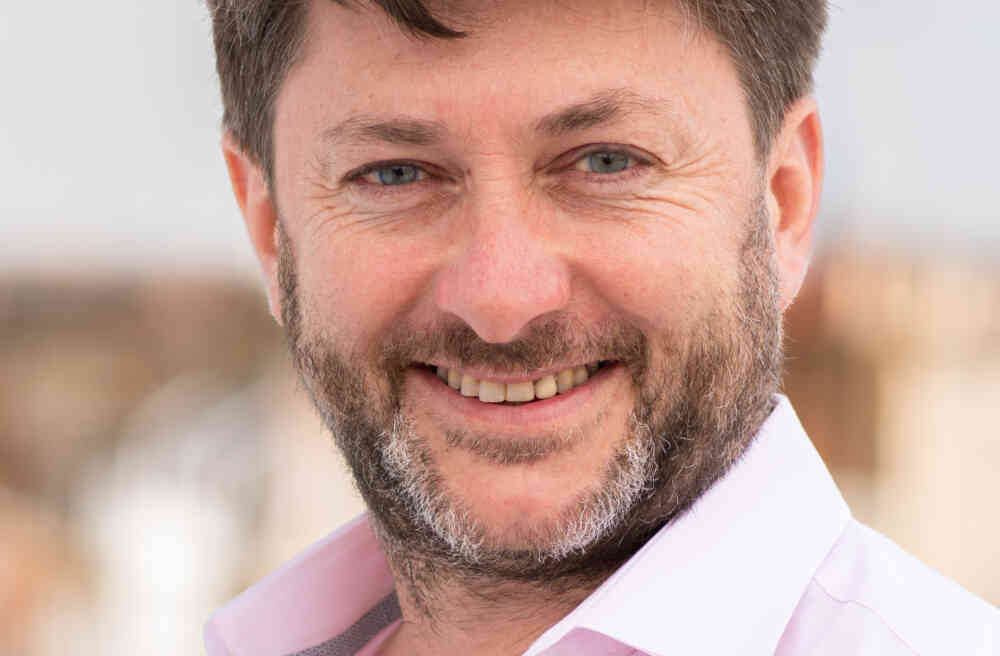
In a new opinion piece for Green Street News, Socius Managing Director Barry Jessup explores how recent events, from contractor insolvencies and supply chain pressures to geopolitical uncertainty, are reshaping the way developments are delivered. Drawing on Socius' experience delivering major projects such as Botanic Place and Mill Yard in Cambridge, Barry argues that resilient delivery comes not from tougher contracts, but from earlier collaboration, aligned incentives and trusted relationships across the entire project team. The full article can be read below:
The past few weeks have provided another reminder of just how much the development industry has changed.
Ardmore's collapse in June exposed the fragility that exists within parts of the construction supply chain, disrupting major projects and affecting confidence across the market. At the same time, new steel trade measures were introduced causing fresh uncertainty around material costs, while renewed conflict in the Middle East is once again raising questions about supply chains, energy prices and the wider economic outlook. Add to that a construction sector already constrained by skills shortages and limited capacity, and one thing becomes clear: volatility is no longer an occasional disruption, it is the backdrop against which every major project is delivered.
That changes the role of the developer.
For years, our industry has treated risk as something to allocate, transfer or price. Increasingly, I think that's the wrong mindset. The challenge isn't avoiding uncertainty, that simply isn't possible. It's creating delivery models that can perform despite it and give investors the confidence to keep backing ambitious projects.
That starts with recognising that construction isn't a series of transactions. It's an ecosystem in careful balance.
Every project depends on consultants, contractors, specialist subcontractors, manufacturers and suppliers whose success is interconnected. When one part of that ecosystem comes under pressure - whether through insolvency, labour shortages, material price inflation or geopolitical events - the effects are felt across the whole project.
The traditional response has been to transfer as much risk as possible to the main contractor through two-stage procurement. In a more predictable market that often worked. Today, unless investors are prepared to pay a significant premium to buy out uncertainty, it is becoming increasingly difficult to sustain. Risk doesn't disappear because it's written into a contract, more often it simply resurfaces later through prolonged pre-construction negotiations, value engineering, programme delays or failed procurements.
The answer isn't to transfer more risk. It's to manage it more intelligently.
That means selecting contractors earlier, based not simply on the lowest overheads and profit, but on confidence in the quality of the team and its ability to deliver within budget. It means involving key trade contractors while designs are still evolving so their expertise improves buildability, informs procurement and, where appropriate, allows critical materials to be secured before prices move further. Above all, it means creating the right commercial environment, where developers, contractors and the wider supply chain are working towards a shared target cost with clear incentives to solve problems rather than simply pass them on.
That shift isn't only required from developers, main contractors also need to embrace a different approach. Too often we see lengthy PCSA periods followed by inevitable price creep, only for negotiations to collapse and everyone to walk away having lost time, money and momentum. Procurement should create certainty, not prolong uncertainty. That requires greater transparency, aligned incentives and a willingness from all parties to focus on the outcome rather than the negotiation.
Capacity makes this even more important. The construction industry is estimated to have around 140,000 vacancies, and while Andy Burnham’s commitment to technical education is a welcome investment in the future workforce, increasing capacity will take time. In the meantime, the best contractors and specialist trades can choose which clients they work with.
In that environment, becoming a client of choice is a genuine commercial advantage. Projects that are well led, pragmatic in their approach to risk and transparent in their decision-making are far more likely to attract the strongest delivery teams.
That has been our experience at Socius. Together with our partner Railpen we started on site at Botanic Place and Mill Yard in Cambridge during 2025 – bringing forward two major speculative office-led developments in one of the most challenging delivery environments the industry has faced for many years. That was only possible because we invested time in building trusted relationships across the delivery team, engaged early with contractors and key trade partners, and maintained a relentless focus on solving problems together while protecting the overall viability of the project.
The next disruption may come from tariffs, skills shortages, geopolitical events or something none of us can yet predict. All we know for sure is that at some point it will come.
The developers who succeed won't be those who write the toughest contracts or transfer the most risk. It will be those who recognise that construction is an ecosystem and to succeed you need to build trusted partnerships, align incentives and create resilient delivery models to keep projects moving in an increasingly uncertain world.
 Botanic Place construction passes halfway point
 Populate welcomes Dr Angela Kukula as Director of Science and Innovation
 Populate’s Lunch & Learn builds momentum
 Izaak Morley Jessup joins Socius as Assistant Project Manager
 Taking shape: the latest from Mill Yard
 Welcome to the team, Louis!
 Why character is key to creating places that thrive
 You can't contract away uncertainty
 Tailored work experience gives students a real insight into development
 Five years of purpose, partnership and places that make a difference
 Meet the first three projects backed by the London Cancer Hub Community Fund
 Welcome to Jemima!
 My week of work experience at Socius: What really goes into development
 Botanic Place launches new website and brand
 We've moved!
 Why the National Housing Bank needs to go further to unlock delivery